Although Sistema and music therapy are not entirely analogous, there's a very natural, organic overlap between the two. We see this common ground in the vocabulary Sistema-inspired programs use to describe their activities and their impact, and how it often emphasizes the development of the individual as much as the community.
This is the framework in which they can satisfy their own curiosity, when they'll expand their technique while they discover the neat tricks or sounds they can create with their instruments, and find out just how capable they are of growing on their own.
Is it possible that there’s a unifying theory of tempo for a ten movement work? I say there is, and I dedicated the article to Maestro José Antonio Abreu, because the solution I propose would make an economist smile
the nature of advocacy: not changing what people say, but what people do. The image of the bureaucrat gleefully snatching violins out of the hands of infants is a myth. Treating public officials, or those who just don't get it, with scorn and derision invites a similar degree of disrespect and disregard in return
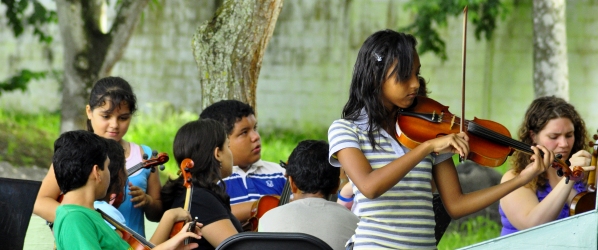
The Venezuelans don't do "conferences," they do "seminarios", their word for "high intensity short-term music camps." Making music is a central part of the experience. It's not about the teachers, it's about the kids and the music.
March might have come in like a lamb, after the mildest winter Boston (my place of residence) has seen in decades, but it's going out like a lion thanks to the Leading Note Foundation Symposium on Social Change through Music in Ottawa this weekend. If you haven't registered, there's still time. Information is available … Continue reading Sistema weekend in Ottawa
Until education is viewed as the acquisition of multiple literacies for life-long learning rather than the timely regurgitation of factoids for standardized testing, music can’t compete in the educational sphere
...The part of the experience that has stayed with me the longest was the opportunity to engage with the music on a completely different level, to go beyond playing it to a place where I started to understand it, to appreciate its architecture and narrative experientially, even if I lacked the knowledge to deconstruct it theoretically. The difference was no more than frequency and repetition, but music had finally begun to mean something more to me.
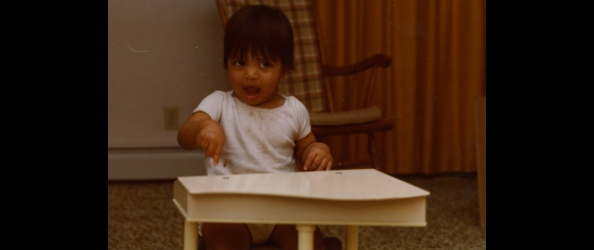
I occupied my mandated daily half hour by playing through things as best I could, trying to play fewer wrong notes each time without any conscious strategy or method, in a pseudo-Bachian optimism that if I were to hit most of the right keys at roughly the right time, the device would in fact play itself.




 Jonathan Andrew Govias