The goal of social action through music has never been to impart instruction in the most efficient manner, but in the most organic.
This is where things really get interesting – Logic Model additions Part 2

The goal of social action through music has never been to impart instruction in the most efficient manner, but in the most organic.

Everyone agrees that exposure to music is a good thing: the challenge before the community is to make that exposure more potent, more effective and longer-lasting in a framework of increasing scarcity.

Culture is inextricably linked with politics. Artistic expression rarely exists without some kind of subsidy, and the disposition of tax monies on all its forms is habitually scrutinized and challenged with a fervour grossly disproportionate to the total expenditure.
Welcome to WordPress.com! This is your very first post. Click the Edit link to modify or delete it, or start a new post. If you like, use this post to tell readers why you started this blog and what you plan to do with it. Happy blogging!

Some advice for anyone interested in applying for the final year of Abreu / Sistema Fellows at NEC

The social power of music is something we hold to be good and true. And in many ways, this is greater proof than any study
The manner in which we engage with art often divorces it entirely from its social origins: orchestra and opera companies deliver performances in great temples before catatonic worshipers, popular music concerts are presented at exorbitant – nay, elitist ticket prices in massive stadia that reinforce social isolation, rather than reducing it.

Although Sistema and music therapy are not entirely analogous, there's a very natural, organic overlap between the two. We see this common ground in the vocabulary Sistema-inspired programs use to describe their activities and their impact, and how it often emphasizes the development of the individual as much as the community.
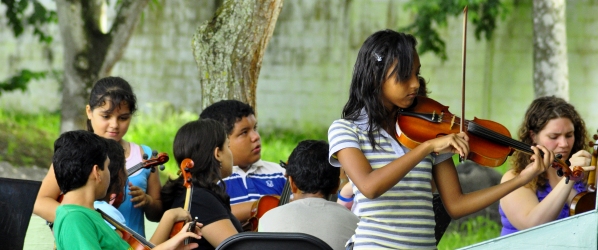
This is the framework in which they can satisfy their own curiosity, when they'll expand their technique while they discover the neat tricks or sounds they can create with their instruments, and find out just how capable they are of growing on their own.
Is it possible that there’s a unifying theory of tempo for a ten movement work? I say there is, and I dedicated the article to Maestro José Antonio Abreu, because the solution I propose would make an economist smile
 Jonathan Andrew Govias